






Demosthenes, Aristotle, and Hieroglyphs: A Historical Perspective on Stuttering
Stuttering Through History: From Ancient Orators to Egyptian Hieroglyphs
Stuttering has been a part of human history for thousands of years. While modern science continues to explore its causes and treatments, historical figures like Demosthenes and Aristotle have left us valuable insights into speech disorders. Additionally, ancient Egyptian hieroglyphs provide intriguing evidence of how stuttering was perceived in early civilizations. In this article, we will explore the historical context of stuttering and its impact on some of history’s greatest thinkers and societies.
Demosthenes: The Orator Who Overcame Stuttering
Demosthenes, the great Athenian orator (384–322 BCE), is one of the most famous historical figures associated with stuttering. As a young boy, he struggled with speech difficulties, which were considered a major obstacle for anyone aspiring to public life in ancient Greece. However, through sheer determination and relentless practice, Demosthenes transformed his speech. According to historical accounts, he used unique methods to improve his articulation, such as speaking with pebbles in his mouth, reciting verses while running, and practicing in front of a mirror. His perseverance allowed him to become one of the most influential political speakers of his time, proving that dedication and structured speech training can lead to remarkable improvements.
Aristotle’s Views on Stuttering
The Greek philosopher Aristotle (384–322 BCE), a contemporary of Demosthenes, also wrote about speech and its disorders. In his works, he suggested that stuttering and other speech impediments were caused by a lack of coordination between the tongue and the mind. Although his theory was not scientifically accurate, it demonstrates that speech disorders were a subject of interest even in ancient philosophy. Aristotle’s recognition of stuttering highlights its long-standing presence in human communication and the search for explanations regarding its origin.
Ancient Egyptian Hieroglyphs and Stuttering
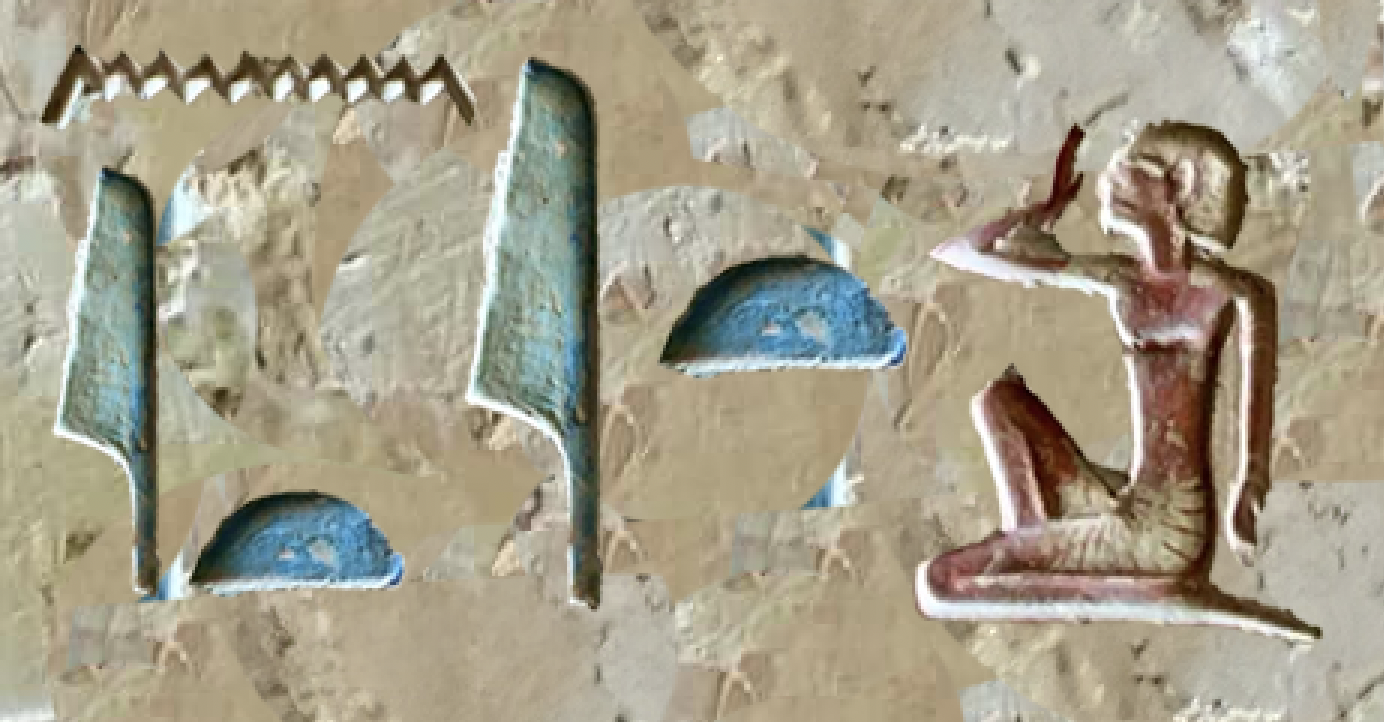
Beyond Greek civilization, evidence of stuttering can be found in ancient Egyptian hieroglyphs. Some inscriptions suggest that Egyptians had specific symbols to describe speech disorders, indicating that stuttering was recognized and possibly even documented in early medical texts. While interpretations of hieroglyphs related to stuttering are still debated among historians, their existence shows that stuttering was acknowledged as a distinct condition even thousands of years ago.
The Relevance of History in Modern Speech Therapy
The stories of Demosthenes, Aristotle’s observations, and Egyptian hieroglyphs remind us that stuttering is not a modern phenomenon. Throughout history, individuals have sought ways to understand and overcome speech difficulties. Today, advanced speech therapy techniques, such as New Speech Methodology, provide structured approaches to help individuals achieve fluency.
Conclusion
From ancient Greece to Egypt, the history of stuttering reflects the universal human struggle to master speech. Demosthenes’ triumph over stuttering serves as an inspiring example of persistence, while Aristotle’s writings and Egyptian hieroglyphs highlight the early recognition of speech disorders. By learning from history, we can continue to develop innovative speech therapies that empower individuals to overcome communication challenges.
For more insights on overcoming stuttering, visit newspeech.com and explore the latest advancements in speech therapy and fluency training.